|
|
|
|
|
 |
|||
|
|
|
|
|
|
|
|||
| Click Here For Full Artist Print Indexes | Aviation History Archive |
|
Aviation Art Prints  Pilot Signatures Modern Era Signatures UK H Pilot Signatures Modern Era Signatures UK H  Howe, John Howe, John |
[UP] - Hanna, Ray - Harper, Chris - Haven, Dick - Hawker, Jas - Hawkins, Ian - Hazelden, Hedley - Heeps, James - Hewlett, Tim - Higgins, Martin - Hoare, Frank - Hobbs, David - Hopkins, Bruce - Hopkins, Mark - Hoskins, Brian - Howe, John - Howes, G - Hoy, Al - Hubbard, Ken - Humphries, Mark - Hussein, HRH Feisal |
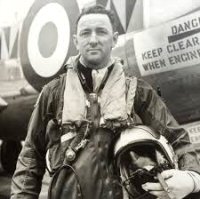
Air Vice-Marshal John Howe CB CBE AFC | Air Vice-Marshal John Howe CB CBE AFC John Howe flew Spitfires, Mustangs and Vampires With the South African Air Force and F-5lD Mustang fighter bombers in the Korean War before joining the RAF 'to fly Hunters'. He commanded the first RAF Lightning squadron when No.74 Sqn converted from Hunters to Lightnings in 1960, and led the famous No.74 Sqn 'Tigers' nine-ship Lightning aerobatic team. He has flown all the legendary USAF 'century series' fighters, and later commanded the F-4 Phantom OCU and RAF Gutersloh. John Frederick George Howe was born in East London, South Africa, on March 26th 1930 and educated at St Andrew's College, Grahamstown. As soon as he left school, he joined the South African Air Force and trained as a pilot. In early 1951 he joined No 2 Squadron, known as the Flying Cheetahs, which was based in South Korea as part of the United Nations forces. The squadron, equipped with the piston-engine Mustang, was heavily engaged in the ground attack role in support of the Army. On June 24th, Howe took off with three others. They responded to an emergency call for air support by a surrounded ground force. In the face of intense anti-aircraft fire, the four Mustangs attacked gun emplacements a number of times. Howe did not expect to survive, but the four aircraft returned to base. All four pilots received US gallantry awards. A month later, Howe was forced to crash land and was rescued by a helicopter. In September, as a 21-year-old second lieutenant, he was the leader of four aircraft instructed to attack enemy troops that were threatening friendly forces. Fierce enemy fire damaged Howe's aircraft but he continued to lead his formation against the target. The US authorities awarded him an immediate DFC, the citation recording: He displayed a standard of leadership above and beyond that normally expected. After completing his flying tour, Howe remained in Korea as a forward air controller before returning to South Africa. At the end of 1954 he travelled to Britain to join the RAF. In April 1956 he joined No 222 (Natal) Squadron flying the Hunter. When a volunteer was required for forward air controller duties with No 3 Commando Brigade in late 1956, Howe's experience in Korea helped to land him the job. He sailed with the Brigade for the ill-fated Suez campaign and, at dawn on November 6th, landed on the beaches at Port Said with No 40 Commando, to direct aircraft on to targets in the area. In the event, the campaign was short-lived. Howe returned to his squadron before joining No 43 Squadron as a flight commander, still flying the Hunter. He was awarded a Queen's Commendation for Valuable Service in the Air, receiving a second two years later. In June 1959 he started training to take command of his Lightning squadron. Howe remained in the fighter business, including a tour of duty with the USAF which gave him an opportunity to fly the latest American fighters, including the Phantom. He has flown all the legendary USAF 'century series' fighters. In 1968 he was appointed to command the RAF's operational conversion unit that saw the introduction of the Phantom into RAF service, his unit being responsible for the conversion of the first squadron crews. After a staff tour he became the station commander of RAF Gutersloh, the home of two Lightning squadrons and a support helicopter squadron. His fighter squadrons, based a few minutes' flying time from the border with Warsaw Pact forces, mounted a continuous quick-reaction capability. He rarely missed an opportunity to maintain his fighter pilot proficiency. After attending the Royal College of Defence Studies he served at HQ 11 (Fighter) Group, and on promotion to air commodore was appointed the commandant of the Royal Observer Corps (ROC). The organisation had a fine record, but Howe justifiably believed that it was in need of modernisation and a more robust attitude. With his usual, not always popular, vigour, he set about applying the same exacting standards to the ROC that he did to his flying. By the time he left in 1980, the efficiency of the Corps had risen sharply. In May 1980 he was appointed the air officer commanding the Southern Maritime Region, a departure from his previous fighter experience and where his usual forceful approach was much in evidence. His final appointment in the RAF was the dual role of Commandant General RAF Regiment and Provost Marshal of the RAF. He retired in November 1985. He was appointed CB (1985) and CBE (1978). Air Vice-Marshal John Howe died January 27th 2016. |
| Air Vice-Marshal John Howe CB CBE AFC - Signed Aviation Art Prints, Paintings and Drawings |
|
|
|
|
Contact Details |
|
Sign Up To Our Newsletter!
This website is owned by Cranston Fine Arts. Torwood House, Torwoodhill Road, Rhu, Helensburgh, Scotland, G848LE Contact: Tel: (+44) (0) 1436 820269. Email: cranstonorders -at- outlook.com
|
|
|